Morning headaches?
A headache that greets you before your coffee does isn't bad luck. It's often a sign of what happened while you slept — especially how you were breathing.

A few reasons you might wake up with headaches
Overnight oxygen dips
If your airway narrows or closes during sleep, oxygen drops and blood vessels in your head dilate. You wake up with the bill: a dull, pressure-like headache.
Teeth grinding and jaw clenching
Bruxism often travels with disturbed sleep. Hours of clenching show up as head, jaw, and temple pain in the morning.
Fragmented sleep
Waking briefly dozens of times a night — even without remembering it — leaves your brain under-recovered and headache-prone.
Alcohol and dehydration
A nightcap fragments sleep, relaxes your airway, and dehydrates you. All three feed morning head pain.
Neck strain and sleep position
A pillow that puts your neck at a bad angle for eight hours can refer pain straight to your head.
Signs your headaches may be sleep-related
- The headache is there when you wake and fades within the first hour or two
- It feels like dull pressure on both sides, not a stabbing pain
- You snore, or someone says you do
- You wake with a dry mouth or sore throat
- You're tired all day even after a full night in bed
- You have high blood pressure or it's been creeping up
Two or more of these together? That pattern is exactly what the home sleep test is built to explain.
It's not just a headache.
Frequent morning headaches are one of the classic signs of obstructive sleep apnea — your airway repeatedly narrowing while you sleep, dipping your oxygen and spiking your blood pressure. The good news: it's very findable and very treatable. One night of data usually settles it.
One night of data beats years of wondering.
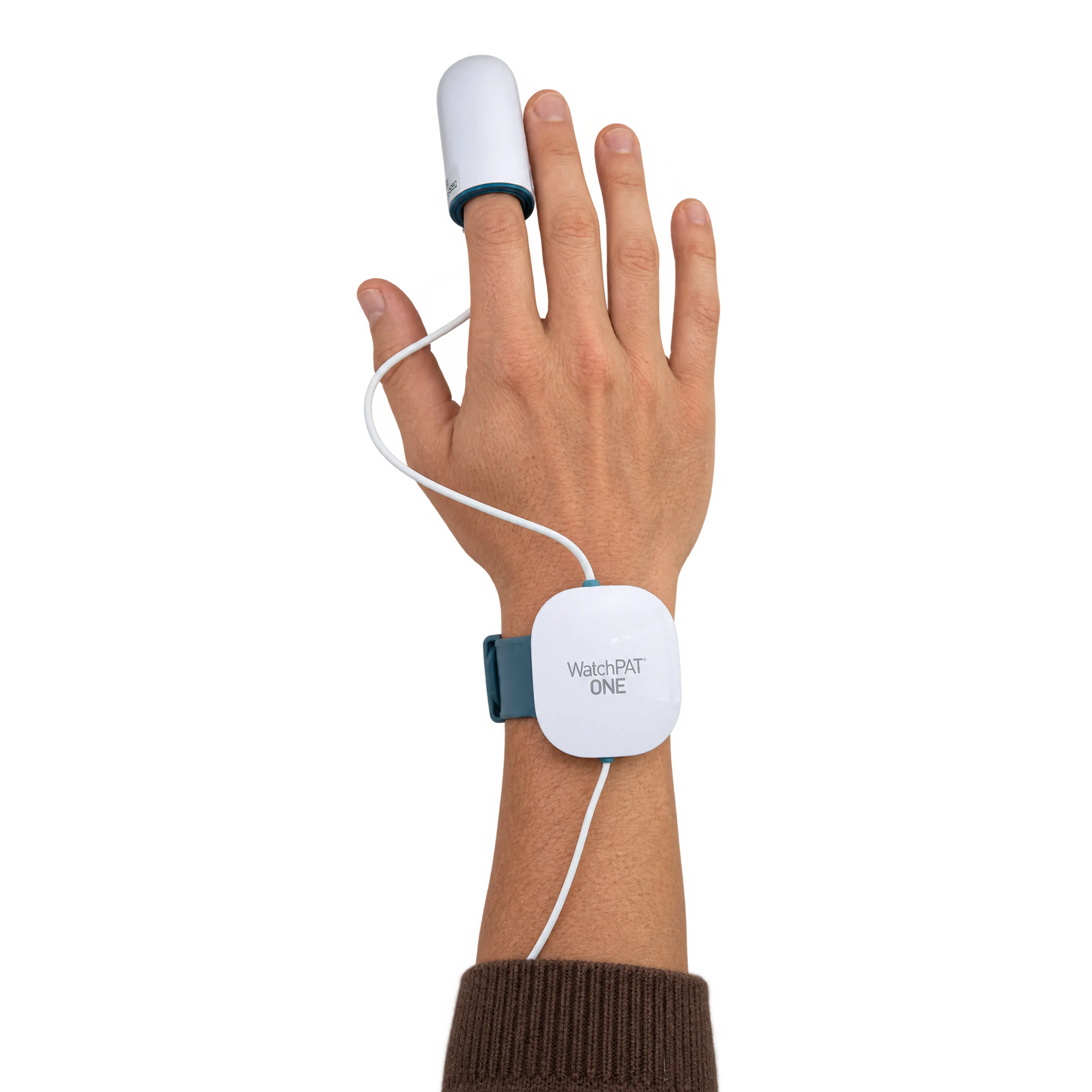
The home sleep test we trust.
- Test tonight, in your own bed — no clinic, no waiting list
- FDA-cleared, validated in 100+ clinical studies
- Board-certified sleep physician reviews every test
- Clear report in days, with a prescription if apnea is found
Before you decide.
Do morning headaches mean I have sleep apnea?
Not necessarily — grinding, dehydration, and neck strain cause them too. But when they come with snoring, tiredness, or witnessed pauses in breathing, sleep apnea moves to the top of the list. That's exactly what the home sleep test checks.
Why do the headaches fade after I get up?
Once you're upright and breathing normally, oxygen and blood flow rebalance and the pressure eases. That fade-after-waking pattern is precisely what makes them look sleep-related.
What if my test comes back clear?
Then you've ruled out the serious cause, and your report still shows your sleep quality — useful for tackling grinding, position, or hydration with your doctor.
Questions? Real humans answer. Usually within a few hours.
Email info@fixsnoring.com