Waking up suddenly?
Jolting awake — gasping, choking, heart pounding — is your body pulling an emergency brake. It's worth finding out what it's braking for.

A few reasons you might be jolting awake
Your airway is closing
In obstructive sleep apnea, the throat relaxes shut, oxygen drops, and your brain jolts you awake to breathe. It can happen dozens of times a night — you remember only the dramatic ones.
Stress and anxiety
A wired nervous system can fire off adrenaline mid-sleep, snapping you awake with a racing heart.
Acid reflux
Stomach acid reaching the throat while you're lying flat can trigger choking and coughing that wakes you.
Needing the bathroom
Nocturia breaks sleep on its own — and frequent nighttime urination is itself linked to sleep apnea.
Noise and environment
Sometimes it really is the neighbor's car door. Pattern matters: occasional is normal, nightly is not.
Signs it may be more than a bad dream
- You wake gasping, choking, or feeling like you couldn't breathe
- Your heart is racing when it happens
- A partner has seen you stop breathing or heard you snort awake
- It happens more than once or twice a week
- You wake with a dry mouth, sore throat, or headache
- You're exhausted the next day no matter how long you slept
Two or more of these together? That pattern is exactly what the home sleep test is built to explain.
Your body is trying to tell you something.
Waking suddenly with a gasp is one of the most specific signs of obstructive sleep apnea — it's the sound of your brain rescuing your airway. Left unchecked, those rescue wake-ups fragment your sleep and strain your heart night after night. One night of home testing shows exactly how often it's happening.
One night of data beats years of wondering.
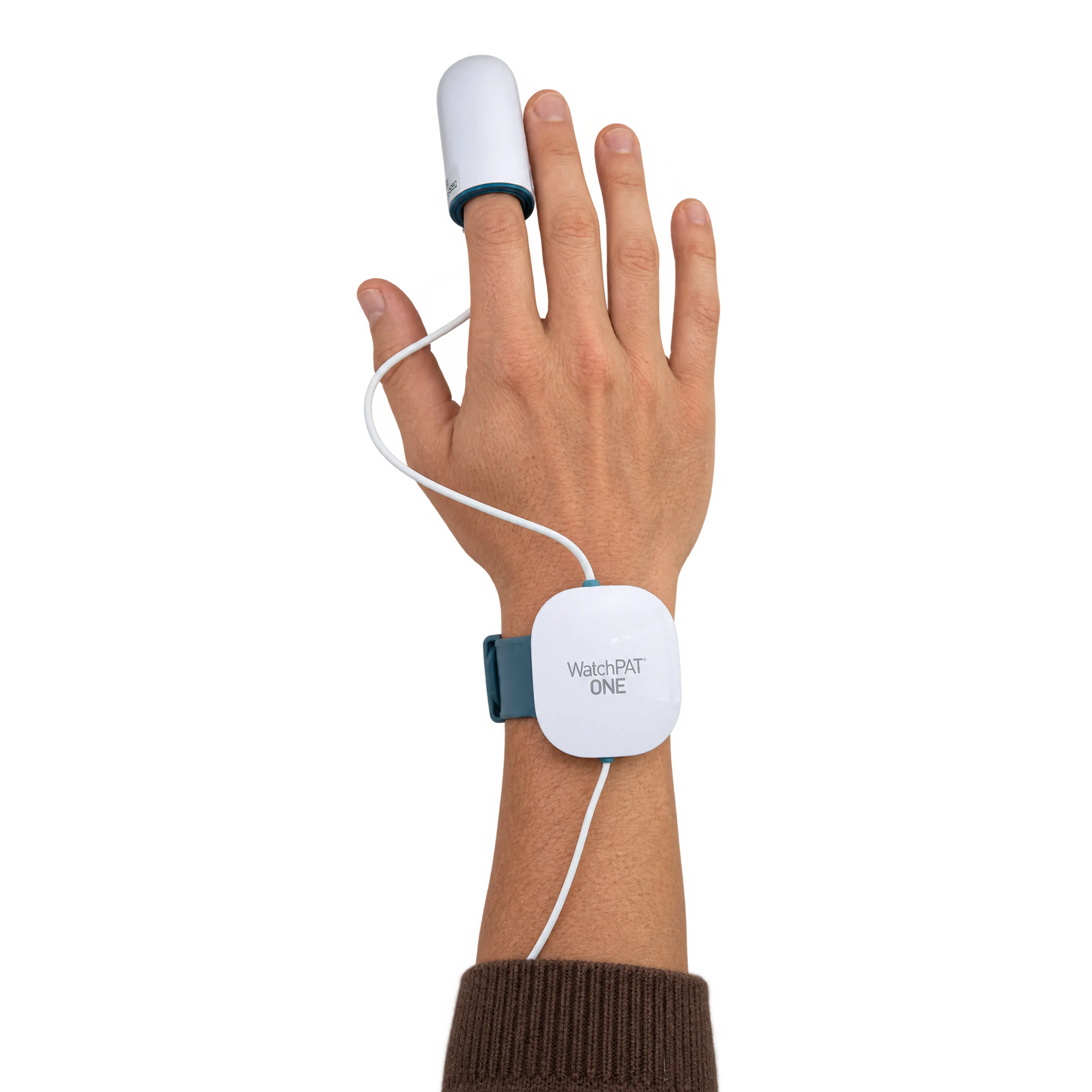
The home sleep test we trust.
- Test tonight, in your own bed — no clinic, no waiting list
- FDA-cleared, validated in 100+ clinical studies
- Board-certified sleep physician reviews every test
- Clear report in days, with a prescription if apnea is found
Before you decide.
Is waking up gasping always sleep apnea?
No — reflux, anxiety, and even vivid dreams can do it. But gasping plus snoring, witnessed pauses, or daytime exhaustion makes apnea the first thing to rule out. The home sleep test counts every breathing event overnight.
I only remember it happening occasionally. Does that matter?
You only remember the wake-ups that fully rouse you. People with sleep apnea often have dozens of brief arousals a night they never recall — that's why testing beats memory.
What happens after the test?
A board-certified sleep physician reviews your night and writes a clear report. If it's apnea, you get a diagnosis and a prescription for treatment. If not, you've ruled out the scary thing.
Questions? Real humans answer. Usually within a few hours.
Email info@fixsnoring.com